MainDine Blog
Why Most Restaurants Are Losing Online Orders (And Don’t Even Realize It)
If you’re a restaurant owner, chances are you’ve already invested time and money into your website, online ordering, and third-party delivery apps.
On the surface, things may look “fine.”
But after reviewing dozens of restaurant websites and ordering setups across the U.S., one thing has become very clear:
many restaurants are quietly losing orders, margin, and repeat customers without knowing it.
This isn’t about bad food or poor service.
It’s about how online ordering is set up.
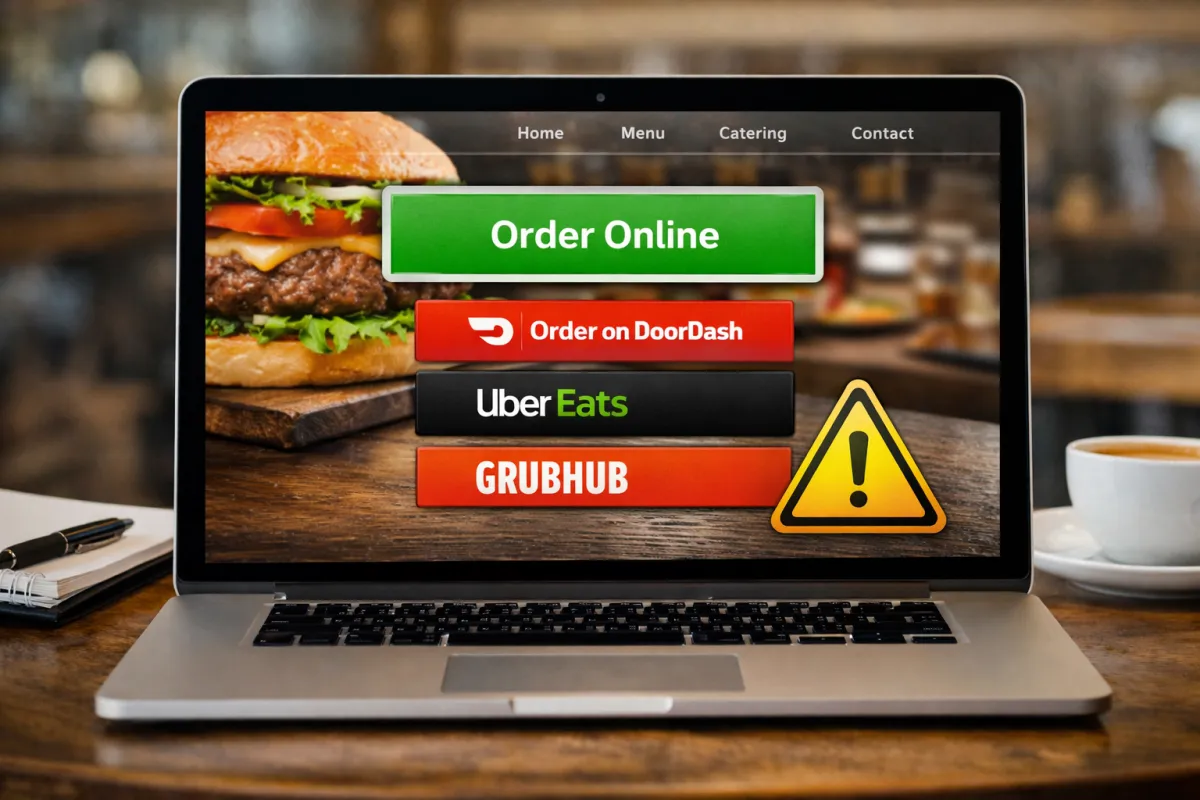
The hidden problem with “Order Online” buttons
One of the most common patterns we see is this:
A customer clicks “Order Online” on a restaurant’s website…
and gets sent to DoorDash, Uber Eats, or another third-party marketplace.
While this feels convenient, it creates three major issues:
High commissions eat into already thin margins
The restaurant doesn’t own the customer data
Repeat orders benefit the delivery app, not the restaurant
To the owner, it looks like online ordering exists.
In reality, the most valuable customers are being handed off to someone else.
Toast ordering isn’t the problem — how it’s used often is
Many restaurants rely on Toast for online ordering, and Toast itself isn’t the issue.
The issue is how often we see:
Ordering buried several clicks deep
Overloaded menus that are hard to use on mobile
Catering treated as a contact form instead of an order flow
Customers don’t abandon orders because they don’t want your food.
They abandon orders because the process is confusing or slow.
Every extra step costs conversions.
Catering is where the biggest money leak usually is
Catering is one of the highest-margin revenue streams for restaurants, yet it’s often handled like this:
“Fill out this form”
“Email us your order”
“We’ll call you back”
That friction kills momentum.
Customers who are ready to place a $300–$1,500 order don’t want back-and-forth emails.
They want to select items, choose a pickup time, and check out.
When catering isn’t orderable online, restaurants lose both speed and volume.
Broken or outdated websites cost trust instantly
Another common issue is the website itself:
Pages that don’t load correctly
Menus that are PDFs only
Blurry images or outdated information
Customers make snap judgments.
If the website feels neglected, many assume the operation is too.
This doesn’t mean a restaurant needs a full redesign — but it does need a website that works as a sales tool, not just a digital brochure.
Why most restaurant owners don’t notice these problems
These issues don’t announce themselves.
Orders still come in.
The restaurant stays busy.
Delivery apps keep sending checks.
But what’s missing is:
Direct customer relationships
Higher-margin repeat orders
Control over the ordering experience
Most owners only discover the problem when margins tighten or order volume dips.
What a better setup actually looks like
The strongest restaurant setups tend to share a few traits:
Direct, commission-free online ordering on the website
Ordering flows that work seamlessly on mobile
Catering menus that allow customers to order instantly
Systems that integrate with existing POS (no rip-and-replace)
Ownership of customer data for repeat business
None of this requires a massive overhaul.
It requires clarity and a setup designed around how customers actually order.
A simple next step
If you’re not sure whether your restaurant is losing online orders, the fastest way to find out is to look at your own site as a customer would:
Click “Order Online” from your phone
Try placing a catering order
Count how many steps it takes to check out
If anything feels harder than it should, it probably is.
Final note
Most of the restaurants we review aren’t doing anything “wrong.”
They’re simply operating with systems that haven’t kept up with how customers order today.
Small improvements in online ordering and catering flow can unlock meaningful revenue — without changing the food, staff, or POS.